Startups Don’t Fail—Founders Do
Insights from the top exclusive startup ecosystem

Hey there! 👋🏽
Welcome to Exitfund Weekly 🚀⭐️
Your source for insights on startups, angel investors, and venture capitalists!
This week, we’re uncovering why Founder-Market Fit isn’t optional—it’s the foundation of startup success, and it can’t be faked. 🕵️♂️ 🎭
Explore why even the best ideas fail when FMF is missing. ❌
FMF: The Founder Advantage You Can’t Fake
How Airbnb, Canva, & other global startups succeeded by living the problem first

Startups don’t die from bad products, tech failure, funding drought, or competition; they die because of clueless founders, those who don’t know the market they’re building for. Nearly 35% of startups collapse because their founders don't understand their customers' needs. On the other hand, founders who live the customer problem and have true Founder-Market Fit are 230% more likely to scale and 50% more likely to get funding. Why? Because ideas can be copied, products can be pivoted, and cash can be burned, but FMF is something you can't fake. 🤷♂️ 🚀
Airbnb’s Brian Chesky and Joe Gebbia rented out air mattresses in their apartment during a sold-out design conference, learning exactly what guests wanted, a small idea that became a global empire. Similarly, Melanie Perkins saw that design tools were too complex and dove in to create the simple solution that became Canva. These aren’t just random stories; they are the founders who succeeded by building what they themselves—and the market—desperately needed. And research from Stanford backs this up; that founders with deep industry experience outperform competitors by 45%, underscoring how FMF drives success. 🕵️♂️
Explore how FMF isn’t just a buzzword, it’s the unique edge and the fair advantage that gives you staying power because startups built on deep personal insight don’t just launch products, they solve problems the market is begging to pay for. 🛠️
Reckless Teen Drivers, Fake Licenses & Lives At Risk
No bribes, just skill-based training—that’s how licenses should work

Every four minutes, someone in India dies on the road, over 150,000 lives lost each year, a figure driven by untrained drivers, fake licenses, and a reckless driving culture that treats safety as optional. This week on the Exitfund Podcast, we speak with Deepanshu, the founder of Drivigo, who’s on a mission to end India's biggest road safety crisis by fixing how the nation learns to drive. His platform connects learners with certified driving instructors, ensuring they earn their licenses through proper training, not through bribes or loopholes. 🚗 🚨
India may lead the world in highway construction, but our driver training is stuck in the past. Most people learn to drive from family or friends, not professionals, turning public roads into their practice ground. From rash teenagers treating cars like toys to daily hit-and-run headlines, the cost of skipping proper training is paid in lives lost and a road culture that grows more dangerous every day. Deepanshu is tackling the problem at its root, making skill and responsibility the foundation of driver education. 🛣️
Tune in to see how fixing driver training, licensing, and road ethics could turn chaos into safety, and why treating driving as a responsibility, not a DIY skill, might save thousands of lives. 🚦
From Red Carpet To Billion-Dollar Boardroom
The smartest stars aren’t chasing roles—they’re building brands
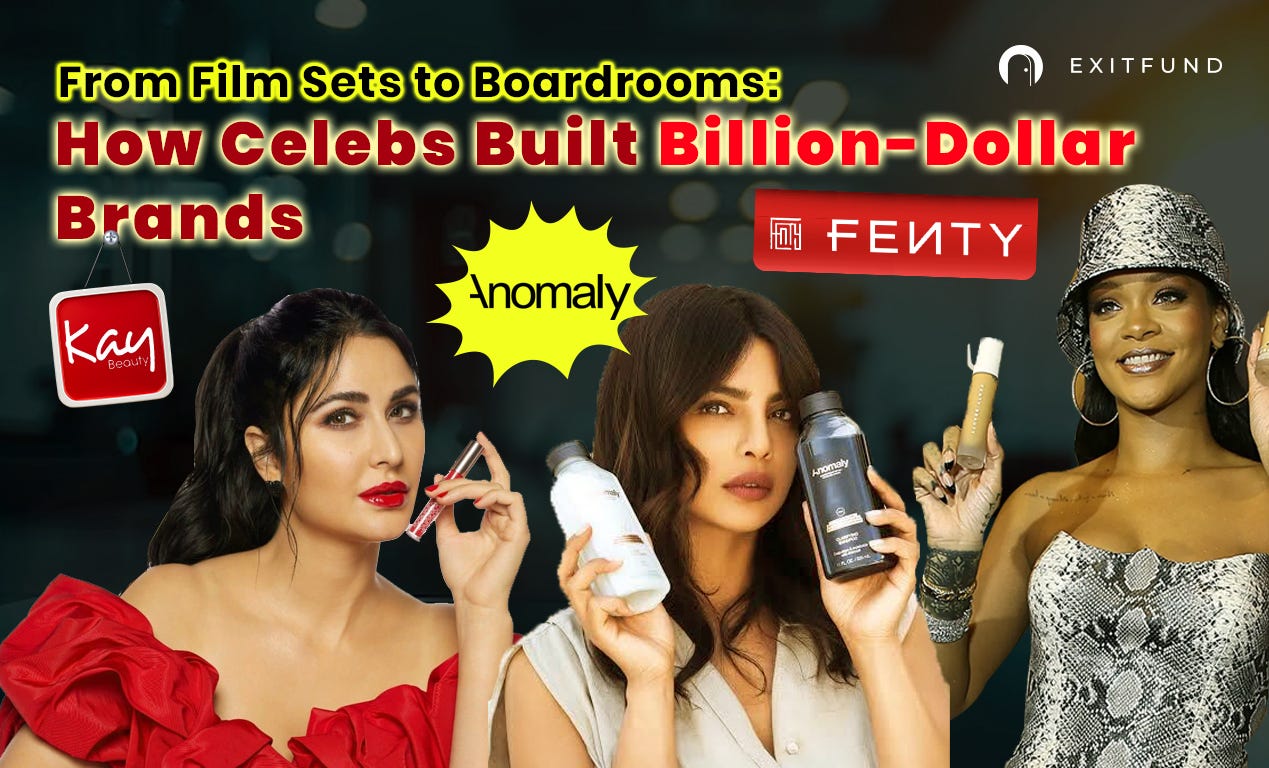
Once, the biggest stars relied on studios, labels, and endorsement deals. Now, they’re creating billion-dollar empires of their own. Celebrities like Katrina, Priyanka Chopra, Rihanna, and Dwayne Johnson aren’t just signing movie deals anymore; they’re creating products, owning equity, and running businesses worth more than their acting or music careers ever paid them. The shift is clear: the red carpet is now the entry point to global market dominance. 🎬
From Priyanka’s Anomaly, one of the fastest-growing celebrity beauty brands in the US, to Rihanna’s Fenty Beauty, generating over $600 million in yearly sales, the numbers are staggering. Katrina Kaif’s Kay Beauty pulled in $10.6 million revenue in 2024, cementing its place in India’s booming beauty market. Kylie Jenner sold a 51% stake in Kylie Cosmetics for $600 million, putting the company’s valuation at $1.2 billion. Even The Rock’s Teremana Tequila is projected to hit $3.5 billion in lifetime value. These aren’t side hustles—they’re category-shaping companies built on star power, strategic partnerships, and relentless execution. 💄 💰
Watch as we explore how the world’s biggest names are turning fame into scalable, global businesses, and why the smartest move for the next generation of stars is ownership, not endorsements. 🚀
Thanks for reading! If you liked today’s newsletter, we’d love for you to share it with a friend. 📤