

PM Modi’s Latest Warning Could Change India’s Economy Forever
The deeper business message hidden inside India’s latest national appeal

A few days ago, India heard something unexpected.
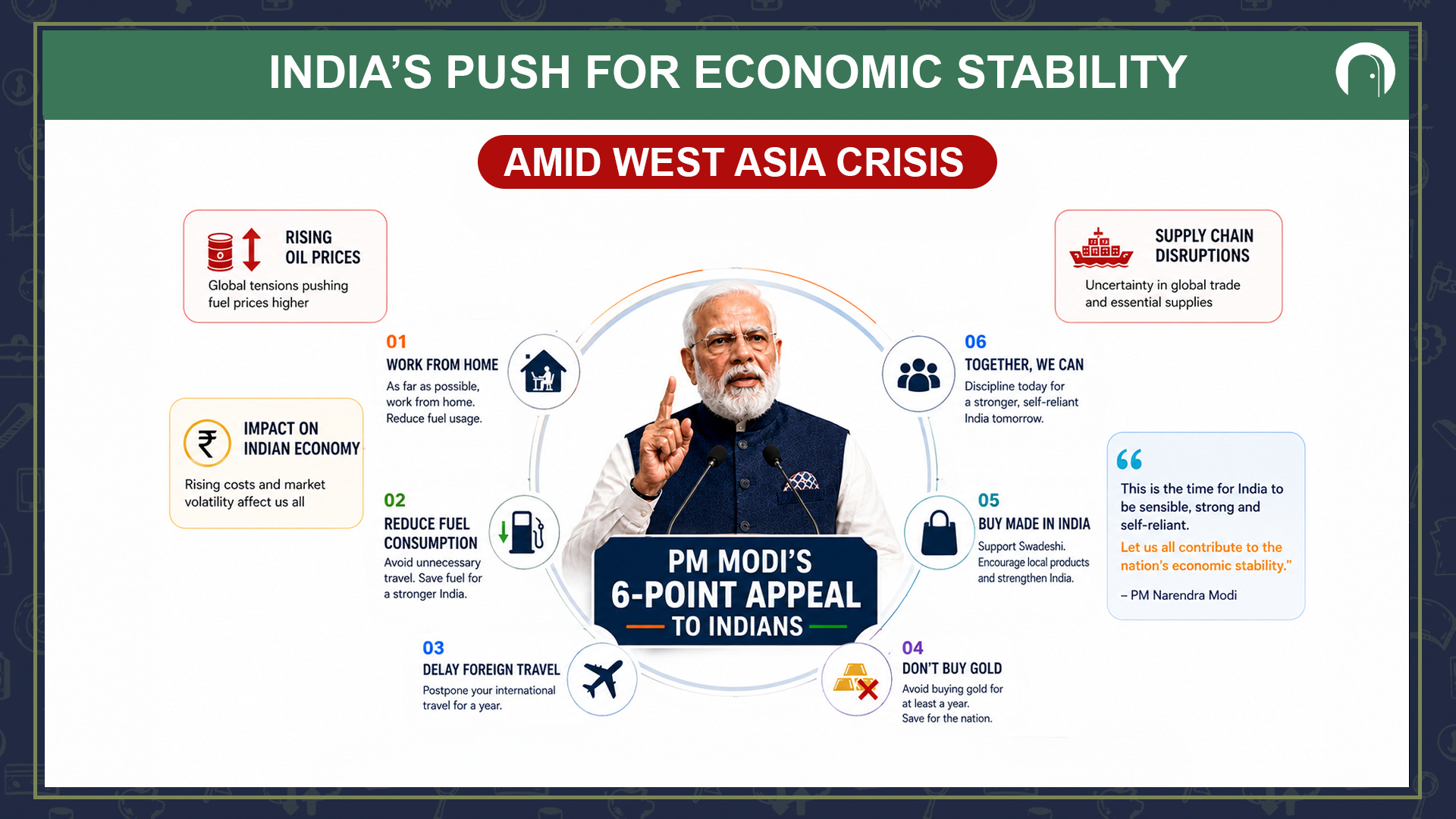
Work from home.
Online meetings.
Reduce fuel usage.
Avoid unnecessary travel.
Use public transport.
Delay non-essential spending.
For a moment, it felt like the country had gone back to 2020.
Social media immediately jumped to one conclusion:
“Is another lockdown coming?”
But that wasn’t the real story.
If you looked carefully, this wasn’t a public health speech.
It was an economic signal.
And for business owners, founders, operators, investors, and startup leaders, it may have been one of the most important signals India has given in years.
Because beneath all the headlines about fuel saving and remote work was a much bigger message:
India is preparing for a more unstable global economy.
And businesses need to prepare, too.
The Real Issue Is Oil — Not Work From Home
India imports nearly 85% of its crude oil requirements.
That single number explains why the government is suddenly talking about behavioral discipline.
Because oil affects almost everything:
Transportation
Manufacturing
Food prices
Logistics
Delivery costs
Airline pricing
Electricity
Inflation
Consumer spending
When oil prices rise globally, India doesn’t just pay more at petrol pumps.
The entire economy becomes more expensive.
And right now, global tensions in West Asia are increasing fears around energy supply disruptions and shipping risks.
India understands what can happen next:
Imported inflation
Pressure on the rupee
Higher business costs
Lower consumer demand
Margin compression
Slower GDP growth
And instead of reacting after the damage begins, the government appears to be trying something different:
Reduce pressure before the crisis escalates.
Businesses Should Pay Attention to This Shift
Most people heard:
“Save fuel.”
Businesses should have heard:
“The economy is entering a defensive phase.”
That changes how companies should think about:
Spending
Hiring
Expansion
Operations
Supply chains
Cash flow
Energy dependency
Because when governments begin encouraging restraint, efficiency usually becomes more valuable than aggressive growth.
And that’s already happening globally.
Investors today reward:
Profitability
Operational efficiency
Sustainable growth
Lower burn rates
Lean business models
The “growth at any cost” era is fading.
What’s replacing it is:
Resilient growth.
The Pandemic Accidentally Taught India Something Valuable
During COVID, India discovered something unexpected.
Remote work reduced:
Fuel consumption
Traffic congestion
Corporate transport costs
Office operating expenses
And now those lessons are returning — not because of health concerns, but because of economic efficiency.
This is important for businesses.
Because hybrid work is no longer just an HR decision.
It is becoming an economic strategy.
Imagine this at scale:
Millions commuting less
Lower fuel demand
Reduced logistics stress
Lower urban congestion
More digital operations
That has a massive macroeconomic impact.
The Companies That Will Win Next May Not Be the Loudest Ones
In the last startup cycle, companies were rewarded for:
Fast expansion
User growth
Hyper-scaling
Aggressive spending
But in uncertain economies, different businesses win.
Usually, the winners are:
Efficient operators
Cash-flow disciplined companies
Infrastructure builders
Essential service providers
Low-dependency businesses
In simple words:
The next winners may be boring businesses with strong fundamentals.
And honestly, that’s already visible.
Industries That Could Benefit From This Shift
1. SaaS & Remote Work Infrastructure
If hybrid work rises again, businesses enabling digital collaboration could benefit:
Video conferencing
Cybersecurity
Cloud infrastructure
Remote productivity tools
AI workflow automation
India’s SaaS ecosystem may quietly gain from this transition.
2. EV & Public Transport Ecosystem
When fuel pressure rises, alternatives become more attractive.
That creates momentum for:
Electric vehicles
Battery startups
Metro infrastructure
Railway modernization
Shared mobility
Fuel efficiency is no longer just an environmental policy.
It is an economic policy.
3. Logistics Optimization Startups
One of the biggest business opportunities ahead may be:
helping companies reduce operational waste.
Expect growing demand for:
Route optimization
Fleet intelligence
AI logistics systems
Fuel analytics
Supply-chain efficiency platforms
In expensive economies, efficient software becomes extremely valuable.
4. Domestic Manufacturing
The speech strongly aligns with India’s larger self-reliance push:
Make in India
PLI schemes
Semiconductor manufacturing
Defense localization
Electronics manufacturing
The message is becoming clearer:
Reduce external dependency before global instability worsens.
That could create long-term opportunities for Indian manufacturing and local brands.
7 Lessons Businesses Should Take From India’s Economic Warning
1. Efficiency Is the New Competitive Advantage
The companies that survive difficult periods are usually not the flashiest.
They are the ones that:
Control costs
Preserve cash
Optimize operations
Reduce unnecessary burn
Growth still matters.
But sustainable growth matters more.
2. Reduce Dependency Wherever Possible
Businesses overly dependent on:
Imported materials
Expensive logistics
Single suppliers
Fuel-heavy operations
will face a higher risk if global volatility increases.
Diversification is becoming a survival strategy.
3. Build Digital-First Operations
The companies that adapted fastest during COVID were digitally prepared.
That lesson still matters.
Businesses should invest in:
Automation
Cloud systems
Remote collaboration
AI workflows
Digital infrastructure
Not because it’s trendy.
Because it reduces operational vulnerability.
4. Cash Flow Matters More Than Valuation
This may be the biggest startup lesson of the decade.
Easy money cycles don’t last forever.
Strong cash flow, profitability, and financial discipline matter much more during uncertain periods.
5. Consumers Become More Practical During Economic Stress
When inflation rises:
Luxury slows
Impulse buying drops
Value brands perform better
Essential services become stronger
Businesses need to understand shifting consumer psychology early.
6. Local Supply Chains Will Become More Important
Globalization is not disappearing.
But countries and companies increasingly want:
Backup systems
Domestic production
Strategic reserves
Local sourcing
The “cheapest global option” model is weakening.
7. Resilience Is Now a Growth Strategy
This is the biggest lesson of all.
For years, resilience sounded defensive.
Today, resilience itself is becoming a competitive advantage.
Because in unstable environments:
Reliable businesses win trust
Stable businesses attract investors
Efficient businesses survive longer
And survival itself becomes market leadership.
Final Thought
Most people heard:
“Use less fuel.”
But businesses should have heard:
“Prepare for a more volatile world.”
That’s the real insight here.
India appears to be entering a phase where resilience matters as much as growth.
And that changes how smart companies will build:
Teams
Supply chains
Technology
Logistics
Capital strategy
Expansion plans
The next decade may not belong to the fastest-growing businesses.
It may belong to the most prepared ones.